JAGANNATHA RATHA YATRA Celebrations 2026 begin!
Click below to scroll down to..
Jagannatha Astakam – in English and Telugu
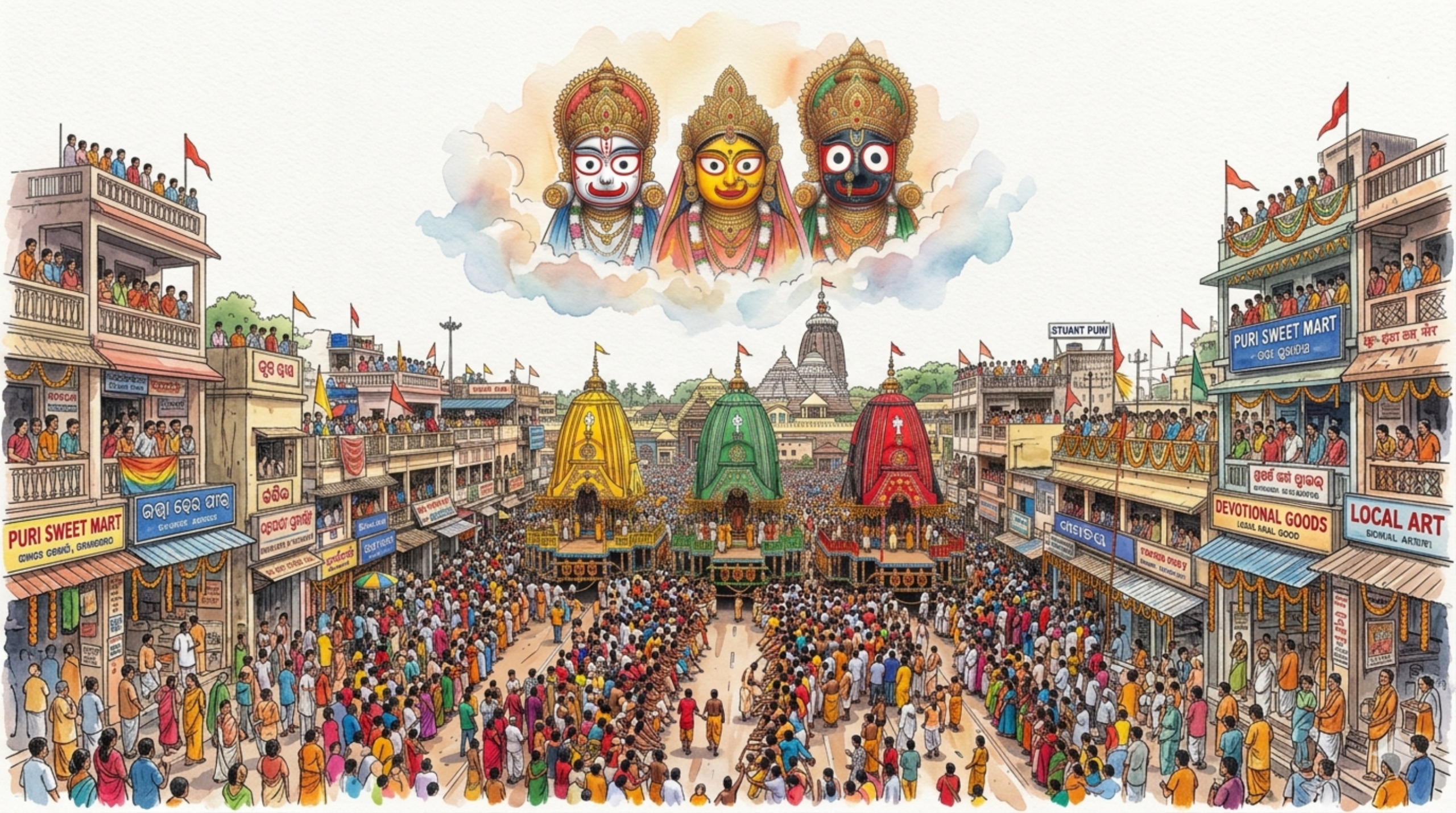
To understand the Jagannath Ratha Yatra, we have to look beyond the massive crowds and the giant chariots. It is a highly structured, centuries-old psychological and spiritual process that brings the divine out of the temple and directly into the streets.
The Timeline of the Journey
The Ratha Yatra is not a single-day event. It is a carefully timed sequence of rituals that mirrors the human experience of exhaustion, rest, and renewal.
Devasnana Purnima (The Bath): The cycle begins with a massive public ritual. Lord Jagannath, Lord Balabhadra, and Devi Subhadra are brought out and bathed with 108 pitchers of herbal, scientifically purified water. It is a raw, physical cleansing process.
Anasara (The Rest): After the heavy bathing ritual, the deities symbolically fall ill. They enter a 15-day resting period. The temple doors are shut to the public. During this time, they are treated with herbal medicines and allowed to recoup in total silence. This is the crucial pause before one of the largest human gatherings on earth. It is a powerful reminder that even the divine requires rest, boundaries, and a period of withdrawal.
Netrotsav & The Ratha Yatra (The Emergence): On the 16th day, the deities emerge fully restored in their fresh, youthful forms (Nava Yauvanotsava). The doors open, the chariots are pulled, and the actual Yatra begins.:
The Core Philosophy: Why the Chariots?
Historically, the wooden deities are traced back to King Indradyumna. According to the texts, the figures were left intentionally incomplete. They have massive eyes but no hands or feet. This is not a design flaw. It is a profound philosophical statement: the ultimate reality sees everything, but moves and acts without physical limits.
The most important aspect of the Ratha Yatra is its accessibility. Throughout the year, devotees must follow strict rules to enter the temple. But during the Yatra, the hierarchy collapses. The Lord of the Universe leaves the inner sanctum and comes out to the dusty streets. It is the ultimate act of supreme equality.
You do not have to be qualified or perfectly clean to see the divine; the divine comes directly to you.
The Jagannath Ashtakam – Adi Sankaracharya
Adi Sankaracharya visited Puri and composed the Jagannath Ashtakam, an eight-verse masterpiece of sonic architecture.
When millions gather, the noise and visual chaos can be overwhelming. The Ashtakam was designed as an acoustic anchor to cut through that noise and force hyper-focus.
The Benefits of the Ashtakam:
- Mental Clarity: Notice that the chant does not ask for wealth, status, or success. It simply asks for clear vision. Reciting it shifts the mind away from endless material demands and brings you back to the present moment.
- Sensory Regulation: The rhythmic meter of the Ashtakam acts as a grounding technique. When the external world is chaotic (like a massive chariot festival or a stressful workday), the specific phonetic structure calms the nervous system and creates a quiet space internally.
The Inner Yatra
The physical pulling of the massive wooden chariots requires the synchronized effort of thousands of people. But the true journey is internal.
The Ratha (chariot) represents the human body. The horses are the senses. The mind is the driver. And the soul is Jagannath, sitting quietly inside. The entire festival is an invitation to take the command, navigate the chaos of the world, and recognize the silent observer traveling within you.
The entire chant builds up to a singular, repeating focal point:
జగన్నాథః స్వామీ నయనపథగామీ భవతు మే
(Jagannatha Swami nayana patha gami bhavatu me)
This translates to: “May the Lord of the Universe, Jagannatha, become the object of my vision.”
Jagannath Ashtakam
kadāchit-kālindī taṭavipina saṅgītakaravō
mudābhīrī nārīvadana kamalāsvādamadhupaḥ ।
ramā śambhu brahmāmarapati gaṇēśārchita padō
jagannāthaḥ svāmī nayanapathagāmī bhavatu mē ॥ 1 ॥
bhujē savyē vēṇuṃ śirasi śikhipiñChaṃ kaṭitaṭē
dukūlaṃ nētrāntē sahacharakaṭākṣaṃ vidadhatē ।
sadā śrīmadvṛndāvanavasatilīlāparichayō
jagannāthaḥ svāmī nayanapathagāmī bhavatu mē ॥ 2 ॥
mahāmbhōdhēstīrē kanakaruchirē nīlaśikharē
vasan prāsādāntassahaja balabhadrēṇa balinā ।
subhadrā madhyasthassakalasura sēvāvasaradō
jagannāthaḥ svāmī nayanapathagāmī bhavatu mē ॥ 3 ॥
kṛpā pārāvārāssajala jalada śrēṇiruchirō
ramāvāṇī rāmasphuradamala paṅkeruhamukhaḥ ।
surēndrairārādhyaḥ śrutigaṇaśikhā gīta charitō
jagannāthaḥ svāmī nayanapathagāmī bhavatu mē ॥ 4 ॥
rathārūḍhō gachChan pathi milita bhūdēvapaṭalaiḥ
stuti prādurbhāvaṃ pratipadamupākarṇya sadayaḥ ।
dayāsindhurbandhussakala jagatā sindhusutayā
jagannāthaḥ svāmī nayanapathagāmī bhavatu mē ॥ 5 ॥
parabrahmāpīḍaḥ kuvalaya-dalōtphullanayanō
nivāsī nīlādrau nihita-charaṇō’nanta-śirasi ।
rasānandō rādhā-sarasa-vapurāliṅgana-sakhō
jagannāthaḥ svāmī nayanapathagāmī bhavatu mē ॥ 6 ॥
na vai yāchē rājyaṃ na cha kanaka māṇikya vibhavaṃ
na yāchē’haṃ ramyāṃ nikhilajana-kāmyāṃ varavadhūm ।
sadā kālē kālē pramatha-patinā gītacharitō
jagannāthaḥ svāmī nayanapathagāmī bhavatu mē ॥ 7 ॥
hara tvaṃ saṃsāraṃ drutataramasāraṃ surapatē
hara tvaṃ pāpānāṃ vitatimaparāṃ yādavapatē ।
ahō dīnō’nāthē nihitacharaṇō niśchitamidaṃ
jagannāthaḥ svāmī nayanapathagāmī bhavatu mē ॥ 8 ॥
jagannāthāṣṭakaṃ puṇyaṃ yaḥ paṭhēt prayataḥ śuchiḥ ।
sarvapāpa viśuddhātmā viṣṇulōkaṃ sa gachChati ॥
iti śrīmad śaṅkarāchāryavirachitaṃ jagannāthāṣṭakaṃ sampūrṇaṃ॥
జగన్నాథాష్టకం
కదాచిత్-కాలిందీ తటవిపిన సంగీతకరవో
ముదాభీరీ నారీవదన కమలాస్వాదమధుపః ।
రమా శంభు బ్రహ్మామరపతి గణేశార్చిత పదో
జగన్నాథః స్వామీ నయనపథగామీ భవతు మే ॥ 1 ॥
భుజే సవ్యే వేణుం శిరసి శిఖిపింఛం కటితటే
దుకూలం నేత్రాంతే సహచరకటాక్షం విదధతే ।
సదా శ్రీమద్వృందావనవసతిలీలాపరిచయో
జగన్నాథః స్వామీ నయనపథగామీ భవతు మే ॥ 2 ॥
మహాంభోధేస్తీరే కనకరుచిరే నీలశిఖరే
వసన్ ప్రాసాదాంతస్సహజ బలభద్రేణ బలినా ।
సుభద్రా మధ్యస్థస్సకలసుర సేవావసరదో
జగన్నాథః స్వామీ నయనపథగామీ భవతు మే ॥ 3 ॥
కృపా పారావారాస్సజల జలద శ్రేణిరుచిరో
రమావాణీ రామస్ఫురదమల పంకెరుహముఖః ।
సురేంద్రైరారాధ్యః శ్రుతిగణశిఖా గీత చరితో
జగన్నాథః స్వామీ నయనపథగామీ భవతు మే ॥ 4 ॥
రథారూఢో గచ్ఛన్ పథి మిలిత భూదేవపటలైః
స్తుతి ప్రాదుర్భావం ప్రతిపదముపాకర్ణ్య సదయః ।
దయాసింధుర్బంధుస్సకల జగతా సింధుసుతయా
జగన్నాథః స్వామీ నయనపథగామీ భవతు మే ॥ 5 ॥
పరబ్రహ్మాపీడః కువలయ-దలోత్ఫుల్లనయనో
నివాసీ నీలాద్రౌ నిహిత-చరణోఽనంత-శిరసి ।
రసానందో రాధా-సరస-వపురాలింగన-సఖో
జగన్నాథః స్వామీ నయనపథగామీ భవతు మే ॥ 6 ॥
న వై యాచే రాజ్యం న చ కనక మాణిక్య విభవం
న యాచేఽహం రమ్యాం నిఖిలజన-కామ్యాం వరవధూమ్ ।
సదా కాలే కాలే ప్రమథ-పతినా గీతచరితో
జగన్నాథః స్వామీ నయనపథగామీ భవతు మే ॥ 7 ॥
హర త్వం సంసారం ద్రుతతరమసారం సురపతే
హర త్వం పాపానాం వితతిమపరాం యాదవపతే ।
అహో దీనోఽనాథే నిహితచరణో నిశ్చితమిదం
జగన్నాథః స్వామీ నయనపథగామీ భవతు మే ॥ 8 ॥
జగన్నాథాష్టకం పుణ్యం యః పఠేత్ ప్రయతః శుచిః ।
సర్వపాప విశుద్ధాత్మా విష్ణులోకం స గచ్ఛతి ॥|
ఇతి శ్రీమద్ శంకరాచార్యవిరచితం జగన్నాథాష్టకం సంపూర్ణం ॥